Eskom’s power stations are improving, with the Energy Availability Factor (EAF) at 65.31% for the financial year (1 April 2025 to 5 March 2026). This performance demonstrates Eskom’s efforts to restore reliability and stabilise South Africa’s electricity grid. Notably, the generation fleet has reached or exceeded the 70% EAF mark 78 times this year, emphasising consistent operational progress.
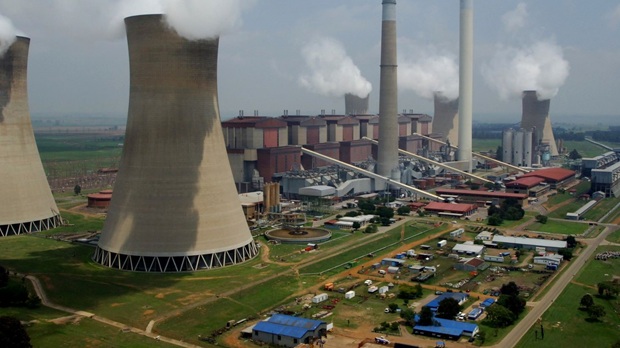
These outcomes are powered by the Generation Recovery Plan, providing yearly, measurable enhancements and guaranteeing more dependable electricity for South Africans.
Between 27 February and 5 March 2026, unplanned outages averaged 8,146 MW—reduced from 15,275 MW in the same week last year. This 46.7% decline indicates a notable improvement.
During this period, the Unplanned Capacity Loss Factor (UCLF)—the percentage of capacity lost due to unplanned events—was 16.89%, down from 31.85% a year earlier—a decline of nearly 15%.
Planned maintenance (Planned Capacity Loss Factor, or PCLF—the percentage of capacity offline for scheduled maintenance) averaged 13.08%, rising from 11.14% the previous year.
Currently, 5,636 MW is held in cold reserve due to excess capacity.
Over the past week, diesel-powered generation contributed 0.86 GWh to the grid at a cost of R5.17 million, with a weekly load factor of 0.15%. For the financial year so far, diesel expenditure is R7.86 billion lower than the same period last year—a 55% reduction. These savings demonstrate Eskom’s improved efficiency and turnaround strategies.
The use of diesel resulted from deploying independent power producer (IPP) Open-Cycle Gas Turbine (OCGT) units. This aligned with take-or-pay contractual commitments with the two IPPs. These agreements were formed during a period of severe supply constraints. They guarantee minimum average usage levels every six months. Under these contracts, Eskom must pay for the committed capacity whether it is utilised or not.
Diesel usage over the coming weeks will primarily fulfil these contractual obligations. As system performance improves and the EAF becomes stronger, Eskom’s focus remains on cost-effective energy sources. Simultaneously, Eskom responsibly manages legacy contracts and maintains grid stability.
Year‑to‑date, diesel expenditure remains consistently below budget and is expected to stay below budget until the end of the financial year.
South Africa has now experienced 294 consecutive days without interruption in supply, with only 26 hours of load shedding recorded in April and May 2025 during this financial year.
To further secure a stable electricity supply, Eskom will bring 1,575 MW of generation capacity online before the evening peak on Monday, 9 March 2026. Evening peak demand is forecast at 23,807 MW. Available capacity will be 29,048 MW, providing a healthy reserve margin above demand.
Eskom released the Summer Outlook on 5 September 2025, covering the period from 1 September 2025 to 31 March 2026, and forecasts no load shedding due to sustained improvements in plant performance from the Generation Recovery Plan.
Key Performance Highlights
- For the financial year to date, the UCLF decreased to 22.9%, reflecting a week-on-week improvement of 0.11% and remaining well below last year’s 25.61%.
- For the financial year to date, planned maintenance averaged 5,353 MW, accounting for 11.38% of total generation capacity. This is more than last week’s 11.34% and lower than the 12.66% over the same period last year.
- Between 1 April 2025 and 5 March 2026, Eskom generated 1,065.15 GWh from OCGT plants at a diesel cost of R6.322 billion. This is much lower than the 2,372.78 GWh generated during the same period last year. That period, from 1 April 2024 to 5 March 2025, resulted in costs of R14.185 billion. Diesel usage has declined each month since May 2025. The month-to-date load factor stands at 0.21%.
- The year-to-date OCGT load factor has decreased to 3.82%, up 0.09 percentage points from the previous week. This remains lower than the 8.52% recorded during the same period last year. The load factor is still below the set target.
Load reduction progress: 199,160 customers are no longer affected during peak periods.
Although the power system remains stable and generation capacity continues to surpass demand, illegal connections and meter tampering persist. These issues cause damage to infrastructure and pose significant safety risks. Eskom continues to carry out load reduction as a temporary measure in high-risk areas. This helps safeguard communities and the electricity network.
To address these challenges sustainably, Eskom has launched a phased programme to eliminate load shedding by 2027. The programme targets 971 feeders and will benefit about 1.69 million customers across all provinces. These customers constitute roughly 23% of Eskom’s total customer base of 7.2 million. Key interventions include deploying smart meters, integrating Distributed Energy Resources, and expanding Free Basic Electricity support. These measures will be complemented by targeted customer education initiatives.
Progress on key interventions
Smart Meter Rollout: To date, Eskom has installed 426,176 smart meters nationwide. Of these, 155,874 (approximately 37%) have been deployed on load reduction feeders. These installations provide customers with greater visibility and control over their electricity use. Smart meters support accurate billing and enhance the overall user experience.
Of the 155,874 smart meters installed on load-reduction feeders, about 90% are located in Gauteng, Mpumalanga, Limpopo, and KwaZulu-Natal. Network risk is highest in these regions.
The phased programme aims to eliminate load reduction plans by installing 577,347 smart meters on load reduction feeders by March 2026. Full rollout on these feeders is scheduled for 2027. Current progress is approximately 27% of the overall end-state target.
The rollout concentrates on high-loss areas affected by illegal connections, meter bypassing, overloaded infrastructure, and widespread electricity theft. Eskom has engaged communities and stakeholders through ward councillors, public meetings, radio, and social media to support the programme.
Despite these efforts, installation teams continue to face resistance. Incidents include intimidation, violence, and repeated work stoppages. These disruptions cause deployment delays, team redeployments, and higher safety risks for Eskom employees and contractors.
Approximately 122,000 planned meter conversions have been delayed so far. This undermines the stability and predictability of the rollout programme.
Feeders Removed from Load Reduction: 151 feeders were removed from load reduction. This includes 16 feeders in Limpopo and Mpumalanga, which is 46% of the target of 37.
There are 40 feeders in Gauteng, 32% of the target of 126. There are 9 in the Eastern and Western Cape, which is 60% of the target of 15. There are 83 in Free State and KwaZulu-Natal, 88% of the target of 94. There are 3 in the North West and Northern Cape, 33% of the target of 9.
Nationally, the 151 feeders removed represent about 56% of the overall year-end target of 271 feeders to be removed from load reduction by March 2026.
To date, with the feeders removed to reduce load, approximately 199,160 customers are now benefiting. This includes 35,149 in Limpopo and Mpumalanga, 49,922 in Gauteng, 10,788 in the Eastern and Western Cape, 92,109 in KwaZulu-Natal and Free State, and 11,192 in the North West and Northern Cape. The remaining customers still scheduled for load‑reduction removal by year's end are 199,187 in Limpopo and Mpumalanga, 95,560 in Gauteng, 14,714 in the Eastern and Western Cape, 35,737 in the Free State and KwaZulu‑Natal, and 32,989 in the Northern Cape and North West.
Overall, 378,187 customers, representing 65.50% of the 577,347 target, still need to be removed from load reduction by March 2026.
Free Basic Electricity (FBE): Nationally, registrations remain at 568,375 customers. The FBE beneficiaries' figure fluctuates monthly. The average for this financial year is 581,495 beneficiaries. The 568,375 figure is a 17.19% increase from the baseline of 485,000 customers and represents 27% of the 2.1 million eligible customers.
Eskom employs technology and community partnerships to create a safer, more reliable power network for South Africa and encourages communities to report illegal connections, use electricity responsibly, and safeguard infrastructure. Report issues to the Eskom Crime Line at 0800 112 722 or via WhatsApp at 081 333 3323.