Engineered polymers manufacturer igus has developed a unique tribological dry coating for high-throughput packaging and manufacturing plants to reduce friction and wear.
Examples of running parts that can be coated with igus friction-reducing dry coatings.
In these applications, friction is the silent productivity killer, wearing chutes and guides and snagging transfer points, increasing maintenance requirements and reducing productivity.
In South Africa, igus is introducing its newly developed iglidur coating technology to companies that require continuous-duty manufacturing and packaging operations. Its tribologically engineered coating uses a special polymer layer to turn standard metal components into low-friction, self-lubricating surfaces designed for continuous duty.
“This removes friction from the equation without introducing maintenance complexity. The coating allows operators to upgrade existing steel components into engineered sliding surfaces that run clean, dry and predictably over long cycles,” says igus South Africa managing director, Ian Hewat. “
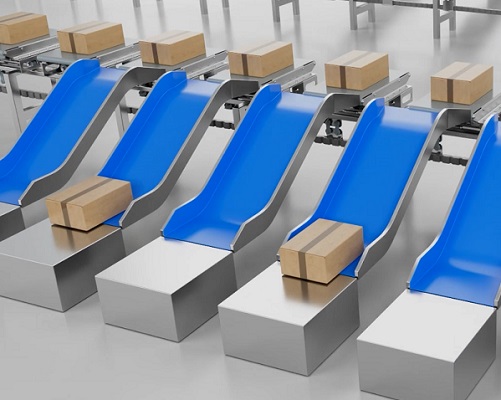
He says many industries face the same challenge: products slide down chutes, are oriented, and transition between conveyors in contact with steel. Over time, that interaction drives abrasion, leads to material buildup, and eventually impacts the smooth flow of the items through the process.
Applied as a powder and baked onto conductive metal surfaces, the coating forms a durable, uniform layer with a defined coefficient of friction. It prevents wear and buildup by embedding solid lubricants within a polymer matrix, resulting in a controlled sliding interface that operates entirely without oils, greases, or other lubricants.
Simple process
Components are first prepared and cleaned to ensure proper adhesion, whereafter the iglidur powder is applied electrostatically, allowing it to evenly coat complex geometries. Once coated, the component is cured in an oven where the material bonds to the substrate and forms a robust tribological surface. For powder coaters, this represents a natural extension of existing capabilities and a value-added service they can offer industrial clients to increase revenue.
The coating is suitable for a wide range of applications, including transfer plates in conveyor systems, chutes in production or distribution centres, vibratory and spiral conveyor systems, food packaging and sorting equipment and many others. igus offers a range of coating variants engineered for specific operating conditions, from general-purpose wear resistance through to high-temperature and chemically aggressive environments. Food-grade options are available with blue-coloured variants supporting visual detection in sensitive processing lines, which is an increasingly important requirement in modern food operations.
Critically, the technology is not limited to new equipment. Existing systems can be retrofitted with coated plates or flexible, coated mesh, allowing operators to improve performance without replacing hardware. This aligns with a growing industry focus on lifecycle optimisation and cost control.
“South African operators are under pressure to do more with less, and igus coatings offer a practical route to extend equipment life and stabilise processes without redesigning the entire system.”
Ian concludes.