Industrial water use in South Africa is on the rise. This is due to an increase in industrial sector companies, newer production processes requiring additional water, and a lack of water reuse initiatives.
The major heavy industries require complex water treatment processes as part of their operational requirements. In many instances, these facilities are often quite old, which could impact downstream operations.
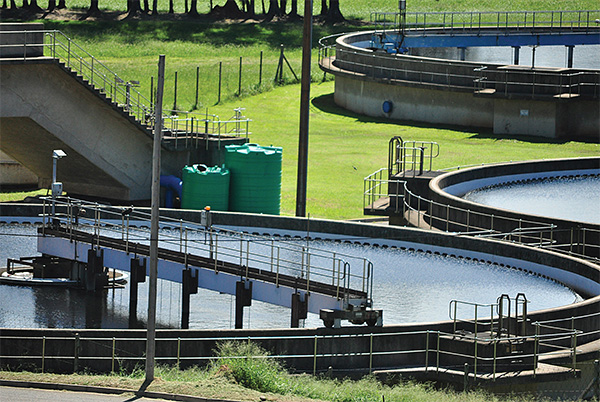
The Durban Water Recycling Project plant reclaims up to 47,5 Ml of wastewater every day, treating it to industrial process water standards.
Effluent treatment facilities for industrial water treatment are usually complex, expensive and take significant timeframes to implement. Heavy industries are also more in the spotlight than small to medium industries with regards to effluent discharge. The raw water treatment processes are typically well established for the smaller to medium industries, and current legalisation allows these industries to discharge effluent to sewer with only limited penalties.
The impact of these types of water use is significant, as evidenced by the water shortage during Cape Town’s recent drought. The lack of available water was exacerbated by huge quantities of water devoured by industry. Additionally, untreated water discharged into the environment can have severe consequences – acid mine drainage being only one example.
South Africa is a water scarce country, and a lot more should be done to preserve the resource. A far greater emphasis on water management and water reuse is required.
To this end, Veolia offers tailored industrial water treatment packages for industry. These include water treatment and water reuse solutions for the automotive, food and beverage, mining, petrochemical, pharmaceutical, power, pulp and paper, and steel industries. As a provider of environmental solutions for water treatment, Veolia installs specialised industrial water treatment equipment – including the appropriate chemical solutions, with operation and maintenance services for treatment facilities forming part of the offering.
“Accurate plant operation and ongoing maintenance are critical aspects to manage water use and the quantity thereof,” explains Chris Braybrooke, General Manager Marketing, Veolia Water Technologies South Africa. “The requirements per segment are fairly similar but as water quality varies for each application, each project must be evaluated in detail. This allows our engineers to select the most appropriate treatment line.”
He adds that wastewater treatment requirements are often driven from a corporate perspective – such as international stakeholders dictating the company’s water footprint; the need for water itself in water scarce areas; or legislative discharge limitations such as the need for Zero Liquid Discharge (ZLD).
The solution provided depends on various fators, which include the client’s specific requirements, the nature of the water or the effluent to be treated, the client’s expected outcome and their budget.
“Many of these decisions are weighted towards financial payback for the company,” Braybrooke says. “Veolia can assist in this regard by performing feasibility studies where the water and wastewater requirements of the facility can be assessed. These studies investigate the different technologies to determine the most appropriate solution, and include findings from both a CAPEX and OPEX perspective. This enables clients to find a solution that is tailor-made for specific applications, and which is fit for purpose.”
While Veolia’s water treatment solutions are tailored towards reduced water consumption, one of the most appropriate – even necessary – solutions for water conservation in the industrial sector is water reuse.
Braybrooke says that businesses in heavy industry are the major consumers of water. To overcome this, projects such as the Durban Water Recycling Project (DWR) can be duplicated to reduce raw water intake. The wastewater recycling plant reclaims up to 47,5 megalitres of wastewater each day and treats it to process standards suitable for industrial use. The treated water is then used by high-volume customers such as Mondi Paper and SAPREF at a fraction of the cost of raw water.
Through the recycling of wastewater, Durban City has been able to free up the potable water supply that can now be diverted towards the city’s growing urban population. “This not only saves water, it also reduces the strain on the municipality’s existing water infrastructure,” says Braybrooke. “Veolia is willing to help source funding for projects of this nature, as was the case with the DWR.”
Veolia manufactures Water Techno Packages, previously known as package plants, specifically for industrial use in the sectors mentioned above. Two standard package plants (which are industry-specific) that are most applicable for the South African and African markets are the water purification package plant for process water and wastewater treatment package plants. These are manufactured locally at Veolia’s Sebenza facility in Johannesburg’s East Rand.
Through the company’s international fabrication facilities, an expanded range of treatment options is also offered. Some of these options include the Moving Bed Biofilm Reactor (MBBR) unit, an aerobic wastewater treatment option; Memthane, an aerobic treatment option for high organic wastewater that produces biogas; and the Evaled Package Evaporators, ideal for highly saline and concentrated wastewaters.
“The main advantage of our Water Techno Packages is that they offer a standardised approach that can be implemented in a reduced timeframe compared to conventional engineered solutions,” Braybrooke explains. “This standardised approach means that an optimised solution (with regards to cost) can be provided, which is to the benefit of the client. Ultimately, cost is the driver.”
Legislation, costs, corporate responsibility and the recent enactment of Carbon Tax will ultimately drive the requirement for water treatment. Incentive schemes, such as those that encourage companies to implement green technologies like biogas, for example, could potentially be expanded.
“In most instances, water treatment is not the client’s core business,” says Braybrooke in conclusion. “Outsourcing operations and maintenance will ensure a reliable water supply to a company’s facility, and in such a way that there is minimal wastage and that all legal and environmental compliance standards are adhered to.”