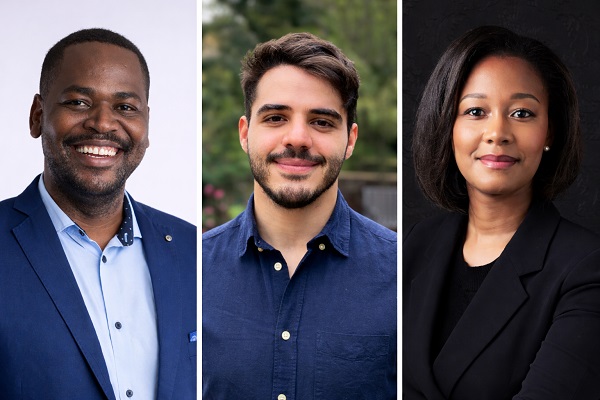
By Prof. Glen Nwaila, Dr Leonidas Vonopartis and Gobona Lizzie Tau
South Africa stands at a decisive moment for its mining industry, shaped not only by rising global demand for critical minerals, but also by leveraging the knowledge, skills and research capacity required to extract them responsibly, efficiently and competitively.
As artificial intelligence, automation and digital systems reimagine mining worldwide and the industry undergoes a promising reinvigoration, South Africa is positioning itself as an engine for 21st-century economic growth.
The recent Investing in African Mining Indaba in Cape Town served as a barometer for renewed confidence in the sector. Drawing a record 10 500 delegates, the event reflected an overwhelmingly bullish sentiment.
It is becoming increasingly evident that the global economy is reorganising around resilient supply chains for metals essential to power systems, defence technologies, digital infrastructure, mobility and manufacturing, and South Africa is well placed to benefit from this shift – provided that mineral development is integrated with robust industrial policy, infrastructure investment and human capital strategy.
A ‘sunrise industry’
Although mining and minerals were not directly mentioned in Minister of Finance Enoch Godongwana’s recent budget speech, the strategic importance of this sector was a cornerstone of President Cyril Ramaphosa’s State of the Nation Address (SONA) in February 2026. He described mining as a “sunrise industry”, with South Africa having some of the world’s largest reserves of critical minerals, and new mines being opened.
Noting that the country has ore reserves valued at more than R40-trillion, Ramaphosa said after years of declining investment in exploration, South Africa is dedicating funds towards geological mapping and exploration to harness critical mineral reserves.
He added that the Industrial Development Corporation recently announced more than R300-million in funding for the Frontier Rare Earths project in the Northern Cape – a venture with the potential to become one of the world’s biggest, lowest-cost new producers of critical minerals needed for smartphones, lithium batteries and other technologies vital to green transition.
Following the budget speech, Mzila Mthenjane, CEO of the Minerals Council South Africa, reflected that the absence of any mention of mining’s performance and contribution to the fiscus, despite its impact on tax and the budget surplus, was “a missed opportunity” – the sector has “an important role in South Africa’s future social and economic security”.
AI-led innovation is transforming mining
Disruptive technologies, specifically AI and advanced analytics, are no longer experimental – they are game-changing operational requirements. At the Mining Indaba, it became clear that technology can be an enabler of human capability.
AI-led innovation is transforming the sector through several key vectors:
- Precision exploration: AI models are being deployed to ensure targeted exploration, minimising “blind” drilling. This drastically reduces water consumption, time-to-market and capital expenditure
- Remote operations and robotics: the rise of remote control centres enables the monitoring and operation of underground machinery from the surface or even from different continents, vastly improving safety and real-time decision-making
- Digital twins and “tech sandboxes”: universities such as Wits are increasingly serving as experimental environments or “sandboxes”, meaning that mining houses can “fail faster” and avoid costly errors in live environments
However, these technologies require specific skill sets to support them and drive further innovation.
Bridging the digital skills gap
South Africa faces a paradox: the country has immense mineral wealth but lacks the high-level technical and digital skills required to extract it sustainably. Institutions like Wits are proactively bridging this gap by forging strategic global partnerships.
The Wits School of Geosciences is currently in discussions with a global software giant to establish a centre for digital mining innovation. Furthermore, collaborations with United Kingdom- and United States-based researchers will expose our students to international best practices in critical mineral research, evaluation, exploration and digital geology.
To match the needs of future jobs, we must adapt the talent pipeline. Today’s graduates possess a “gaming mindset”, making them ideal candidates for training via gamification and simulation. Personalised, virtualised training frameworks, such as the driver simulations discussed at the indaba, allow workers to master complex machinery in risk-free environments before stepping onto a site.
Geoeconomics and value addition
A marked shift is occurring from geopolitics to geoeconomics: where to deploy capital, how to de-risk projects and who to partner with.
Investment is increasingly contingent on environmental, social and governance (ESG) factors. Water scarcity and environmental footprints are top of mind for global buyers and, once again, technology is the solution. From automated water management systems to AI-driven waste reduction, “green mining” is becoming a prerequisite for capital allocation.
Value addition is paramount. As reiterated at this year’s SONA, the G20 Leaders’ Summit in November last year supported South Africa’s proposal to expand local beneficiation of critical minerals and the export of finished products.
Capturing economic returns through local processing and services rather than exporting raw ore is essential to our long-term national prosperity.
Smart collaboration is the way forward
To sustain the momentum, the mining industry must view social legitimacy as an economic imperative. This requires:
- Localised talent pipelines – for example, mining houses should invest in community skills development centres to “grow their own timber”, creating local expertise that serves the mine’s specific technological needs
- Increased research and development funding – development finance institutions should view academic infrastructure as a high-yield investment, since funding research in geometallurgy and AI-enabled mining will produce more future-fit professionals
- Collaborative governance – the strongest project models are those that align host governments, operators, technical partners and researchers early in the lifecycle
If we successfully integrate our vast mineral reserves with cutting-edge AI and a future-ready workforce, South Africa’s mining sector has the potential to become a leader in the global energy transition.
- Glen Nwaila is the director of the Wits Mining Institute and the African Research Centre for Ore Systems Science (CORES) under the Wits School of Geosciences. He is an associate professor of Geometallurgy and Machine Learning at the Wits School of Geosciences
- Dr Leonidas Vonopartis is an economic geologist and mineralogist at the Wits School of Geosciences and leads the process mineralogy stream of CORES
- Gobona Lizzie Tau is a geologist and visiting researcher at CORES. She specialises in strategic minerals, energy transitions and African natural resource governance.
Biographies
Professor Glen Nwaila is the director of the Wits Mining Institute and the African Research Centre for Ore Systems Science, also at Wits. He is an associate professor of Geometallurgy and Machine Learning at the Wits School of Geosciences. Prior to joining Wits in 2018, Prof. Nwaila worked in the mining and consulting industries. He is Erasmus Mundus Scholar at Uppsala University, Sweden, and completed his PhD in Geosciences (Magna Cum Laude) at the Julius-Maximilians-Universität Würzburg, Germany. He holds a Master’s degree in Chemical Engineering from the University of Cape Town and an Honours in Geology from the University of Johannesburg. He is a member of the South African Council for Natural Scientific Professions and a Fellow of the Geological Society of South Africa.
Doctor Leonidas Vonopartis is an economic geologist and mineralogist at the Wits School of Geosciences and leads the process mineralogy stream of the African Research Centre for Ore Systems Science. Dr Vonopartis completed his PhD in Economic Geology at Wits, followed by a postdoctoral fellowship focused on the use of mineral chemistry as an exploration tool for critical metal deposits. Thereafter, he worked in industry as a process mineralogist, specialising in ore characterisation for mining and exploration, before joining Wits Geosciences in 2023 as a lecturer in Economic Geology. He is a member of the South African Council for Natural Scientific Professions and the Geological Society of South Africa.
Gobona Lizzie Tau is a geologist and visiting researcher at the African Research Centre for Ore Systems Science under the Wits School of Geosciences. She specialises in strategic minerals, energy transitions and African natural resource governance, and serves on the advisory board of the Investing in African Mining Indaba. She was previously Centre of Excellence Manager of a nationally funded mineral and energy R&D programme, managing multi-million-rand and multi-institutional funding. She contributes to high-level international policy forums on strategic minerals and Africa’s sustainable development. She holds a Master’s degree in Geology (with distinction) from the University of Johannesburg, South Africa, is Harvard-certified in organisational leadership and is a registered Professional Natural Scientist with the South African Council for Natural Scientific Professions.
About Wits School of Geosciences
The University of the Witwatersrand (Wits) School of Geosciences is the largest and most diverse academic earth science institution in Africa, consistently ranking among the top 150 departments globally in this field. Located in Johannesburg, the historical hub of South Africa’s mining industry, the school builds on a profound legacy of applied and academic research. The Wits School of Geosciences offers comprehensive programmes across crucial sub-disciplines, including Geology, Geochemistry, Geophysics, Palaeontology, Palaeoanthropology and Economic Geology.
The school is home to cutting-edge research entities, such as the African Research Centre for Ore Systems Science and the Earth Observatory, providing state-of-the-art geoanalytical and geophysical facilities. Graduates are highly sought after in the international mining and minerals industries, government and environmental sectors, underscoring the school’s mission to drive innovation and provide world-class training to address pressing global and continental challenges related to mineral resources, water and environmental protection.
https://www.wits.ac.za/geosciences/