Gone are the days when one went in search of an earth leakage (EL) unit and just installed the unit supplied on all sites.
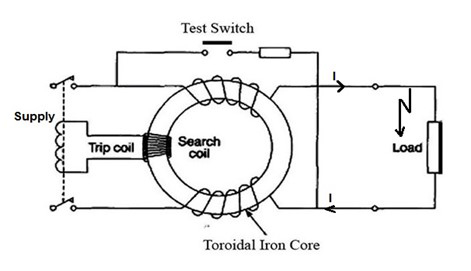
The power supply at the 230/400 V 50 Hz frequency is used by equipment which changes the power supplied or current drawn to power the device in such a fashion as to change the characteristics as to potentially render the EL in-operative or result in nuisance tripping.
As the EL is a vital item in electrical protection, this could have serious consequences!
Earth leakage units are available in overload and non-overload types, which poses an area of risk that needs clarification. Although not part of this particular discussion, the operating variations of either thermal-magnetic (TM) or hydraulic-magnetic (HM) overload detection/tripping must also be factored into the EL selection equation.
EL can also be those that require a voltage to function (voltage dependant) and those that use their own current transformer (CT) power to trip, also called voltage independent.
Virtually all modern ELs detect the imbalance via a CT/toroidal transformer circuit.
If all the current going to the load is fully returned, the CT has no output and is in balance. There is a CT output when the current shunts to earth on the load side (see fault arrow in the illustration). If the short exceeds the set threshold the EL will trip. The CT is a very sensitive type of toroidal transformer. When the current going through the CT is not a perfect, ac wave form output issues can arise.
This is where the crux of the problem lies. Many of the current draws in today’s loads are not being used in a sinusoidal manner and the CT output variation can interfere with the EL operation.
The main problem is the growing dc component showing in the ac current. Manufacturers have been aware of impending problems waiting in the wings and have begun to develop versions which can handle these changes. The only way of knowing exactly which versions of EL you have is the rather tiny diagrammes printed usually on the face of the EL itself.
|
EL TYPE |
Typical loads |
|
AC |
Resistive, capacitive, inductive loads |
|
A |
Single phase with electronic circuitry |
|
F |
Frequency controlled equipment |
|
B |
Three phase electronic equipment |
In summary
Any EL unit not performing to requirement should be evaluated to the above criteria first.
|
BRAND |
|
SYMBOL: A |
By Kevin Flack
Flack has recently retired from industry and believes he still has valuable in-depth knowledge of the South African electrical landscape due to wide experiences gained in his 45+ years working career. He is keen to explore the training arena so that this can be passed on to the current youth so as to benefit their practical ability in the electrical field. In these trying COVID-19 times, Flack can provide online training to keep your staff up to date on all aspects of circuit breaker deployment. Email kevin.flack@outlook.com