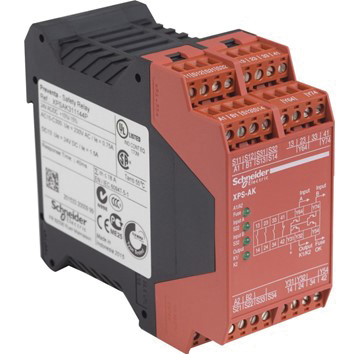
A contactor is an electrically-controlled switch used for switching an electrical power circuit. 1/2/3/4 pole models are an option. A contactor is typically controlled by a circuit which has a much lower power level than the switched circuit, such as a 24-volt coil electromagnet controlling a 230/400/525 V supply.
 Typical fixed voltage types in 12/24/48/60/110/220/400/525 V are available 2 main types, electrical hold/ electrical latching, electrical hold operate with an applied voltage or removal thereof, latching types change status each time voltage is momentarily applied. Contactors can indeed be considered the workhorses of the electrical industry, making and breaking contacts which switch loads in and out of use. This being done with relatively remote safety of a low control voltage and for many reliable operations, 1-3 million is the norm. Even in the event that the selection was not absolutely correct the application may well perform for many thousands of operations given some impression of having been correct.
The loss of operational life may still be acceptable. Herein lies some risk that based on a price only selection the cheaper model/brand is purchased believing the client has been supplied the correct selection model.
Selection process:
 System voltage: The main contacts are required to be tested and approved to make and break under the test application conditions for the required times as specified. Applied standards include UL and EN/IEC etc.
Control voltage: Depending on the control voltage the contactor coil voltage needs to be selected. There is an enhanced safety using a lower than main voltage approach.
Load size: This is most important as this directly gives the contactor size as the greater the load the bigger more robust it will be, normally indicated in kW or Amps.
Load type: Undoubtably the second most important selection point as the load type determines the likely life of the contactor. Either given a written, e.g., as motor type or heating element, but also in a coded format see below. AC1/AC3 etc.
Operational frequency: How often is the switching likely to be once a day/ hourly/ per shift etc.
Additional aux contacts: What the minimum additional auxiliary contacts required to operate the contactor are.
Contact break medium: Mostly the contact operation is done in air but there are some specialised contactor types which can offer vacuum medium breaks. Breaks done in the vacuum offer some important benefits but come at a steep cost.
Based on what is declared in the above select the correct contactor from the manufacturer/supplier data base.
Relay contactors
Of special mention is a range on contactors whose sole purpose is to offer signal options. As such they can have many additional contacts and these can be NO/NC as well as early make or break giving accurate process status. Mostly these are quite low voltages and current being switched but in recent years some manufacturers have load break capabilities of 10-15 A at 400 V which whilst being indicated as a relay they are more power relay types. Also, very low currents and voltages, ≤ 12 V may see the need to have multi break contact sets and gold plated to remove any chance of contact resistance hindering the contact status.
Maintenance
Under optimal conditions contactors/relays will give many, many years of reliable service. Generally, the working environment should be clean and dry as the contactors are quite open for dust ingress. The contact area can be inspected for contact wear and possible replacement of the contacts. Any harsh buzzing may indicate a foreign body clamped in between the pole faces and should be cleared. Expect rapid wear in the contact area due to high closing currents and short circuits, even to the point of contact welding. Coils can also be replaced or exchanged for alternative voltages if needed. Generally, all smaller sizes are not very actively maintained and should be simply replaced. Larger versions do have spares but do not expect these to be available beyond 10 years +. Generally, most manufacturers will not give recommended use beyond the 10 years in service levels. Warning: TYPE 2 co-ordination contactor setups will require manufacturer specified combinations. Contact the manufacturer if in doubt.
Vacuum types
The selected vacuum tube versions which offer contact breaks in a closed/vacuum during use are quite popular at 1000-11 kV levels on active motors. Wear is extremely controlled in the vacuum and there is no likelihood of oxidation taking place. Tubes will wear with aging and there are set marking points that are used for evaluation. This will indicate when the tubes need replacing. Should a tube be damaged in a single-phase short circuit it can be replaced but general all round wear will require all phase bottles be replaced. This replacement is better done under controlled manufacturer conditions. Check the manufacturers data or the rather minuscule printing on most contactor bodies.
Summary
Contactors can provide many years of enduring reliability if correctly specified at minimal maintenance costs and are truly the industry workhorses.
By Kevin Flack Flack has recently retired from industry and believes he still has valuable in-depth knowledge of the South African electrical landscape due to wide experiences gained in his 45+ years working career. In these trying COVID-19 times, Flack can provide online training to keep your staff up to date on all aspects of circuit breaker deployment. Email kevin.flack@outlook.com
There are over 50 or so indicated categories but these are the most popular:
| Utilisation Category | Typical application |
| ac volts | |
| AC1 | Non inductive loads, resistive elements/furnaces |
| AC2 | Slip ring motors switching off |
| AC3 | Squirrel cage motors, switching on off during running |
| AC4 | Squirrel cage motors, starting, plugging, inching |
| AC14/15 | Control of small ac electro0matnetic loads, aux circuits |
| dc volts | |
| DC1 | Non inductive loads, resistive elements/furnaces |
| DC3 | Shunt motors, starting, plugging, inching |
| DC5 | Series motors, starting, plugging, inching |
| DC6 | Switching of incandenscent lamps |