The onus is on businesses to carefully manage their industrial water ecosystems. Water restrictions and unreliability are daily risks. Companies must evaluate their water sources: municipal, rainwater, borehole or river, ensuring that water is suitable for its intended use and that it is being used efficiently. When water leaves the plant, should it be recycled for reuse or treated before discharge?
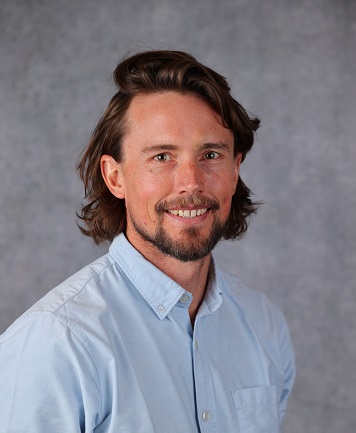
These important points are emphasised by CEO Shaun Golding and his team at industrial water treatment specialist G-Chem Aquacare: “In today’s context of national water scarcity, ageing infrastructure and increasing regulatory pressure, we help industries do more with less water, protecting critical assets and supporting environmental compliance,” Golding explains.
Trusted industrial water partners
Collectively, the founders and shareholders of G-Chem Aquacare possess decades of practical experience in industrial water treatment, providing valuable insight into the shifts and challenges within the current water treatment landscape.
Golding notes that many water treatment organisations have reduced investment in technical training, research, and development. This has caused a broader industry shift towards transactional chemical and equipment supply models rather than entirely integrated, results-driven water management partnerships.
G-Chem Aquacare counters this trend with a highly skilled, results-driven approach. The company prioritises long-term relationships based on technical accountability, operational understanding, and trust.
This method also guarantees effective client education and motivates them to engage in the water treatment process, since success depends greatly on commitment from both parties.
Our founders recognised a growing gap in providing results-driven, technically accountable water treatment solutions that specifically meet our clients’ needs. Too often, clients were sold products rather than client-driven solutions, with limited technical understanding of their processes, risks, and long-term objectives.
We invest in strong, dedicated, and technically proficient water technologists who understand our clients’ operational needs and are responsible for their water quality, efficiency, and risk reduction,” Golding advises.
Growth in water
Since its establishment in 2016, G-Chem Aquacare has grown into a multi-regional industrial water treatment company serving complex, demanding operations across South Africa.
Managing Director Kevin Naidoo emphasises the company’s major achievements, including long-term service partnerships with key industrial, manufacturing, and processing clients, successful implementation of boiler, cooling, effluent, and HVAC water-treatment programmes in high-risk environments, and consistent operational performance where uptime, compliance, and reliability are vital.
G-Chem Aquacare adopts practical, field-tested innovation that enhances control, minimises risk, and delivers measurable results. At G-Chem Aquacare, technology is employed only where it offers operational value, never for novelty.
This includes the increased use of online monitoring and automation, adoption of modern treatment chemistries, and the ongoing refinement of technical standards across boiler, cooling, and effluent systems,” says Naidoo.
Additionally, the company works closely with international technology partners and original equipment manufacturers (OEMs), aligning its solutions with global best practices while using performance data to proactively optimise water, energy, and chemical efficiency.
It is also a member of the Association of Water Technologies (AWT), a prominent international organisation representing water treatment professionals and companies. Golding emphasises the importance of staying aligned with global advancements in industrial water treatment and maintaining connections with leading innovation markets such as the United States, China, and India.
Water across different sectors
G-Chem Aquacare focuses on four key operational areas of water treatment where performance, risk, and impact are highest: boiler water treatment, cooling water treatment, effluent water treatment, and clarification water treatment.
This focused approach enables more detailed technical training, targeted innovation, and disciplined service delivery, resulting in more dependable and sustainable outcomes for clients,” Naidoo notes.
Within this framework, G-Chem Aquacare supports a variety of industries, including food and beverage, dairy, poultry and fisheries, packaging and plastics, timber and wood processing, general manufacturing, automotive, pharmaceutical, commercial buildings, data centres, HVAC, refrigeration, sugar and agri-processing, steel, mining, and mineral processing.
By specialising in specific water treatment services across these industries, G-Chem Aquacare gains a deeper understanding of process-specific risks, regulatory requirements, and operational priorities. This allows for the delivery of practical, results-driven industrial programmes that protect assets, optimise water use, minimise downtime, and support compliance,” he continues.
A vision for water
Golding explains that G-Chem Aquacare’s values are centred on people, performance, technical excellence, and delivering results to clients. The company promotes a results-focused mindset where performance is measured, reviewed, and continually improved, supported by deep technical expertise and strong team cohesion.
G-Chem Aquacare has further strengthened its capabilities by adding highly experienced technical specialists who offer leadership, mentorship, and strategic advice across its main disciplines of boiler, cooling, effluent treatment, and clarification.
Through structured development pathways, continual skills improvement, and a robust culture of safety, accountability, and ownership, the company maintains consistent service quality and long-term organisational resilience.
Water treatment future
Golding identifies significant growth potential in industrial water treatment, especially in helping clients optimise their water-use footprint and enhance internal water efficiency through reuse and recycling strategies.
While the ultimate goal for many industrial facilities is Zero Liquid Discharge (ZLD), achieving it requires a clear understanding of each step in the industrial water cycle, the supporting treatment technologies, and the plant’s operational realities. We work closely with clients to develop practical, phased strategies for water use and reuse, balancing environmental responsibility with financial sustainability,” Golding concludes.