The saying ‘let your hard work speak as you remain silent’ comes to mind when you thinks about how important unobtrusive, silent systems have become in our daily lives, says Dwibin Thomas, Cluster Automation Leader at industry leader Schneider Electric. “In a time of modern energy management, Meter Data Management (MDM) is primary example of a silent, hardworking component that provides us with vital information on how we consume energy.”
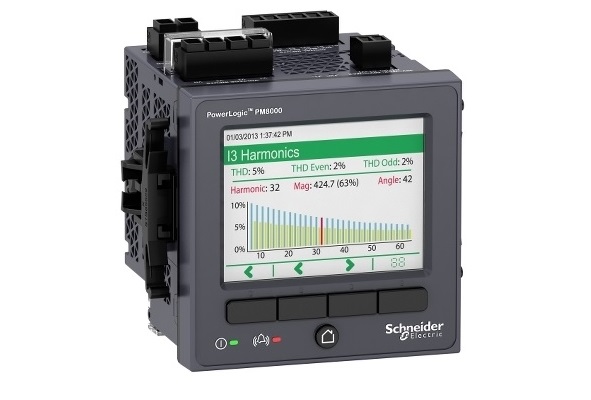
Normally situated at utility offices or control centres, MDM software quietly bridges the gap between smart meters and utility providers, delivering important real-time intelligence and management features that optimise power consumption. “The primary role of an MDM system is to collect data on a half-hourly basis; it connects to the meter, retrieves data and then verifies its accuracy through built-in checks and balances,” explains Thomas. Should there be a case where data cannot be located, the software intuitively and automatically provides an accurate estimate based on historical load profiles. For example, if data is missing at 12h00, it can reference the previous week’s 12h00 load profiles and fill in the gap, so to speak.
Before smart meters and MDM systems became the norm, utility providers relied on monthly estimates to calculate usage bills. With the introduction of smart meters and MDM software, these estimates can be become significantly more accurate and more importantly, automated.
By ensuring fairly accurate measurements, MDM software is able offer cost benefits to consumers, explains Thomas. “By delivering real-time load profiles, the utilities can provide time-of-use tariffs to their customers. This means that instead of a flat rate, customers can be charged varying rates depending on when they use electricity.” There is also improved consumer energy usage. “Peak usage times is often prohibitively expensive – managing power consumption during these times can save on costs, improve demand-side management and contribute to a less strained grid that is already unstable.”
The smart meters and advanced MDMs systems monitor power consumption 24/7 and since it is an automated process, no man hours are wasted. This adds to accuracy, and if a household’s usage exceeds a predetermined threshold, the smart meter will automatically switch off certain appliances. “This not only benefits the utility provider but also empowers consumers to better manage their energy consumption, particularly during periods of loadshedding,” says Thomas.
As mentioned, MDM software goes together with smart meters, and while large power consumers, often referred to as mega-users, are implementing advanced metering systems, widespread adoption is still limited, and the pace is somewhat slow. “MDM software is utilised by these mega-users to accurately align their operations and power consumption with the time-of-use tariff structure,” says the Schneider executive.
From a data generation perspective, the MDM systems currently in use by mega-users is comparatively limited. In contrast, rolling out smart meters for every South African household will generate a substantial amount of data, which in turn helps improve the MDM system. “Managing this data will require Validation, Editing, and Estimating, also known as VEE, which require a sophisticated MDM system,” warns Thomas. “The transition to smart meters and advanced MDM systems has the potential to significantly reduce the need for broad scale loadshedding, allowing for more targeted and efficient energy management.”
Enquiries: www.se.com/za/en