By: Daniel Hammond, lighting designer at BHA Lighting Design and Educator at BHA School of Lighting
Artificial intelligence (AI) has entered lighting design rapidly, and whether we like it or not, it already influences how we think, explore, and communicate ideas. In skilled hands, these tools can open creative doors. They assist us in sketching concepts, testing narratives, and visualising atmospheres well before technical modelling begins in software like Dialux or Relux.
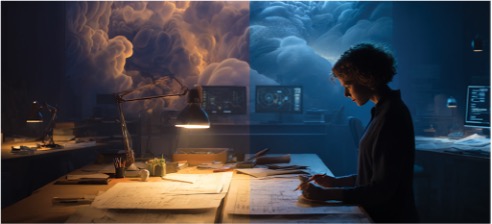
Industry experts believe AI will not replace the depth of knowledge, intuition, and lived experience that a qualified lighting designer brings to every project, as lighting design is fundamentally human-centred. It demands empathy, spatial understanding, and an appreciation for the subtle ways people react to light – qualities that AI cannot replicate. What it can do is support us, generate concept ideas, and relieve us from some of the heavy lifting that hampers the creative process.
With ethical practice at the forefront, here is a closer look at a selection of AI platforms that designers already use to enrich the concept phase and streamline their workflow.
ChatGPT
ChatGPT has become a surprisingly useful companion in the early stages of design.
It can help break through creative blocks, organise thoughts, or offer alternative ways of expressing a concept. Designers can feed it a project brief, a mood, or a narrative direction and receive structured ideas in return. The tool is fast, articulate, and particularly helpful when developing early concepts.
Beyond idea generation, ChatGPT can help prepare written content for presentations, refine communication, or create drafting notes that support the design team. It does not replace professional reasoning, but it does help move thoughts from rough to clear in a short amount of time.
Nano Banana
Nano Banana specialises in quick visual exploration. Enter a description of the atmosphere or lighting you envision, and it will produce expressive images in seconds. For designers who depend on visual cues to test ideas early, this immediacy is exceedingly valuable.
It lets you adjust lighting softness, contrast, colour, or direction with simple language. This is useful for creating mood boards or exploring emotional tone without technical rendering tools. It provides the creative freedom of sketching, but with much greater visual impact.
Rendair.AI
Rendair.AI elevates the process by generating photorealistic images from fairly粗 rough inputs. Sketches, photographs, simple drawings, or models can be transformed into realistic visuals that help clients and colleagues grasp the design concept from the beginning.
This is especially useful for conceptual lighting work. You can experiment with materials, shadow behaviour, composition, and lighting effects without spending hours on detailed modelling. It also enables quick comparison of different variations, making it easier to refine the atmosphere and visual intent before advancing to more technical stages.
Rayon.design
Rayon.design combines CAD functions with AI support to seamlessly fit into lighting design workflows. Designers can create concept lighting layouts, annotate drawings, insert fixture symbols, and include visual assets, all within one platform.
The AI-supported features enhance efficiency. You can create mood board images, trace objects, develop CAD blocks, or stylise drawings without leaving the workspace. This helps bridge the gap between initial ideas and structured layout development, reducing repetitive tasks that often slow down conceptual work.
Midjourney
Midjourney remains one of the most expressive tools available for atmospheric lighting imagery. It interprets lighting prompts with an artistic sensibility, making it ideal for exploring mood, emotion, and narrative. Whether you need scenes with warm golden-hour light, cool moonlight, diffuse softness, or dramatic high-contrast conditions, Midjourney produces visuals with remarkable character.
For conceptual lighting design, these images help clients and collaborators grasp the emotional direction of a project long before technical decisions are made. It is a valuable tool for shaping the narrative language of a space.
Ethical and professional use of artificial intelligence in lighting design
Despite the advancing capabilities of AI tools, ethical practice demands clear boundaries. AI can support our process, but it cannot engage with clients, interpret lived experience, or exercise professional judgment. It does not understand the nuances of lighting standards, people's behaviour in different environments, or the emotional expectations embedded within a brief.
Designers should see AI outputs as suggestions rather than definitive solutions. Every result needs validation, refinement, and understanding of the context. We must be open with clients about the use of AI and ensure privacy and intellectual integrity are protected at all stages.
Used responsibly, AI can free designers from repetitive tasks and allow more time for the human aspects of lighting design that truly matter: imagination, empathy, and creating meaningful experiences shaped by light to benefit humankind.
Enquiries: www.bhalighting.co.za