Warehouses are vital in logistics and industrial tasks, but their efficiency depends on proper lighting. Poor illumination can lead to mistakes, accidents, and lost productivity. High ceilings and large floor areas pose unique lighting challenges—so how can you guarantee safe, even lighting throughout the space?
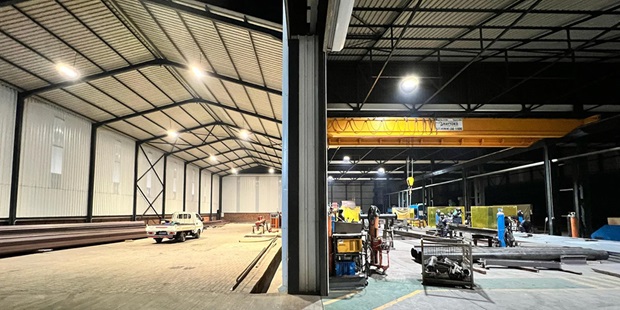
This guide covers the essential aspects of warehouse lighting in South Africa, emphasising the differences between high-bay LED fittings and LED panel solutions to assist operators in selecting the best option for their needs.
Key Points:
- Specialised lighting is essential in warehouses to ensure safety, accuracy, and regulatory compliance.
- High-bay LED fixtures are built for high ceilings, delivering strong illumination across large spaces.
- LED panel lights are ideal for offices, low-ceiling areas, or mixed-use warehouse environments.
- Effective lighting design minimises accidents, boosts productivity, and helps lower operating costs.
- Local suppliers such as View Lighting offer SANAS-certified, B-BBEE Level 2 lighting fixtures tailored for warehouses.
Why Visibility Matters in Warehouses
Warehouses are busy environments with forklifts, order pickers, and staff constantly moving. Poor lighting—such as shadows, glare, or dark spots—can endanger safety. Consistent, uniform lighting supports accurate inventory management and safer, more efficient workflows.
Safety and Compliance: South African health and safety regulations mandate sufficient lighting levels to minimise the risk of workplace accidents.
Productivity and Accuracy: Good lighting reduces errors during picking and speeds up fulfilment processes.
Energy efficiency pressure: Since warehouse lighting runs for long periods, it directly impacts overall operating costs.
High-Bay LED Lights: The Warehouse Workhorse
High-bay lights are designed for ceilings ranging from 6 to 12 metres, providing concentrated brightness and broad coverage for large spaces.
Advantages of High-Bay LEDs
- Delivers high lumen output suitable for large, open areas.
- Long operational life reduces the need for frequent maintenance in difficult-to-access locations.
- Offers greater energy efficiency compared to traditional sodium or metal halide lamps.
Design Considerations
Optics and beam angles can be customised: use wide angles for open floor areas and narrow beams for aisle lighting between racks.
LED Panel Fixtures: A Flexible Alternative
Although high-bay lights are typically used in warehouses, LED panels also serve important functions in these settings.
Benefits of LED Panels
- Their slim design is perfect for offices, control rooms, and storage areas with lower ceilings.
- They provide consistent, glare-free lighting, making them ideal for administrative or desk-based zones.
- LED panels offer a cost-effective lighting solution for mixed-use warehouse spaces.
Ergonomic Considerations
Select lighting colour temperature (CCT) and lux levels that suit each task: cooler light for focused work, warmer tones for break or relaxation areas.
Smart Controls
The integration of sensors and automation helps reduce energy waste in underused areas.
Conclusion
Optimising warehouse lighting in South Africa involves more than just installing fixtures—it focuses on improving safety, productivity, and operational efficiency. High-bay LED lights are ideal for spaces with high ceilings, while LED panels provide essential support in offices and areas with lower ceilings. Together, they form a comprehensive lighting solution that benefits both employees and the business.
With SANAS-certified, locally produced fixtures, View Lighting helps logistics and warehouse operators to craft safer, more efficient work environments through expertly designed lighting solutions.
For more info, visit www.viewlighting.co.za