etcetera • etcetera • etcetera
36
Complete the grid
so that every row
across, every column
down and every 3x3
box is filled with the
numbers 1 to 9.
That’s all there is to
it! No mathematics
are involved. The grid
has numbers, but
nothing has to add up
to anything else. You
solve the puzzle with
reasoning and logic.
For an introduction to
Sudoku see http://
en.wikipedia.org/
wiki/Sudoku
Solution
for SUDOKU
84
SUDOKU NO. 85
Have you visited our website today?
► ► ► ► ► ► ► ► ► ► ► ► ► ► ► ► ►
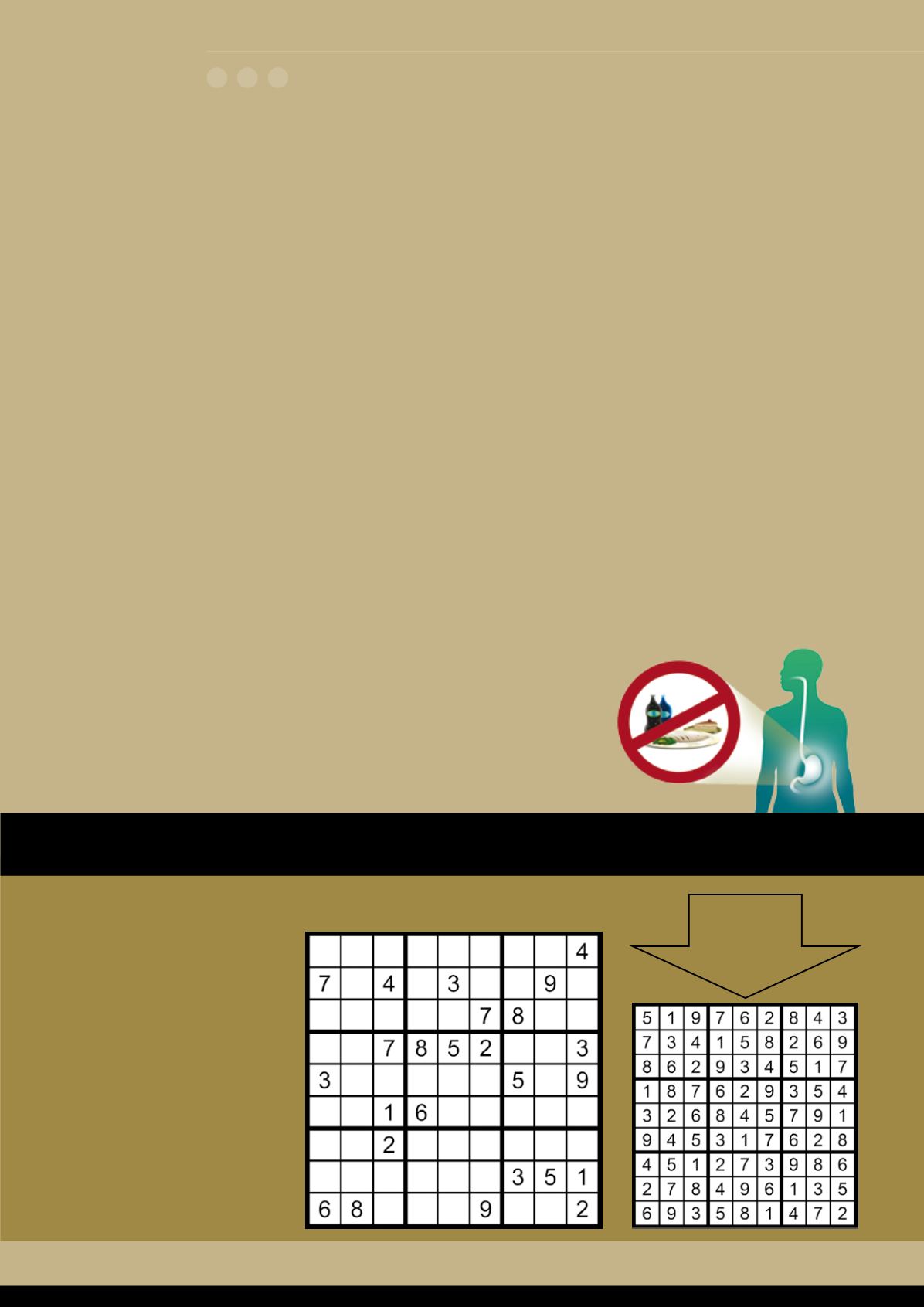
Feeling full for longer to satisfy
appe-
tites and help reduce snacking between
meals is one of the solutions to reducing
the amount of food we eat. Chemical
engineers may have the answer as they
develop special ingredients that have the
potential to reduce hunger pangs once
inside the stomach.
High fibre and protein rich diets are
generally recognized for their ability to
control hunger. However, modern food
consumption has drifted towards softer
textured foods, which are often high in fat
and sugars.
The result is energy-rich, easily digest-
ible foods that are unable to create a
sense of feeling full and satisfied. It’s one
of the factors contributing to rising obesity
rates and an estimated 1,4 billion people
being classed as overweight, according
to “Obesity - Key facts” published by the
World Health Organization in March this
year.
One solution is to design foods that al-
ter its structure once inside the body. The
process can help control the rate of food
digestion and also trick the body’s sensory
systems, especially in the digestive tract,
to make you feel fuller for longer.
One of the most interesting develop-
ments in the field is the creation of ‘gels’
that form once inside the stomach. It’s a
technically difficult area where control of
the gel’s bulk, strength and longevity are
affected by the unique pH environment
found in the stomach.
However, an important step forward
has been made by a research team of
chemical engineers at the University of
Birmingham in the UK, who have been
able to improve the control of gel forma-
tion inside the stomach.
Their research, to be published in
Food
Hydrocolloids
, (Bradbeer, J F,
et al
, ‘Self-
structuring foods based on acid-sensitive
low and high acyl mixed gellan systems to
impact on satiety’) used gellan gum – an
existing food ingredient found in products
such as sweets, soft drinks and soya milk.
They found that by altering the chemical
structure of the gellan gum they could they
could change the properties of the gels,
including important factors such as its
bulk, brittleness and texture.
David Brown, chief executive of the In-
stitution of Chemical Engineers (IChemE),
said: “Despite being a part of everyday
life the science of managing appetites is a
complex interaction of several factors and
is not yet fully understood. However, the
sensory signals from food, the digestive
tract and the body’s energy reserves are
all likely components affecting the desire
to eat.
“Self-structuring gels like those
researched by chemical engineers in Bir-
mingham have a potentially important role
in the future if we are to manage energy
intake and address issues like obesity.
“Some theories suggest that the bulk
created by the gels distend the stomach
altering the sensory signals, as well as the
size and structure of food as it enters the
intestines. This is likely to extend the time
taken to digest the food and may help to
reduce snacking.
“Hopefully, this latest development by
chemical engineers will help us to take
another step forward to change lifestyles
and improve the health and wellbeing of
millions of people struggling to maintain a
balanced diet.”
The role of chemical engineers in the
food sector is explored in IChemE’s latest
technical strategy,
Chemical Engineering
Matters
. The strategy also includes actions
chemical engineers are taking on other
global challenges including water, energy
and health.
Food science that fools hunger pangs
Chemical Technology • September 2013


