Energy and EnviroFiciency
T
ake note
‘The effects of energy conversion are physically, environmentally,
and socially complex and difficult to estimate, and involve very large,
sometimes ultimately unresolvable, uncertainties, unpredictabilites,
and differences of opinion.’ Despite these difficulties, ExternE has
become a well-recognised source for method and results of exter-
nalities estimation.
The ExternE programme has had ongoing work since 2006, but
the methodology developed has been essentially unchanged. The
further work has concentrated on improving the various estimates
of the effects.
In this article therefore, the methodology is reviewed, and other
attempts to determine external costs are considered in the light of
that review.
ExternE methodology
The ExternE study started by identifying the site of a specific form
of pollution, and determining the technology employed and any
mitigatory measures already in place. This allowed estimation of the
emission, eg kg of pollutant per year. It then addressed the way in
which the emitted pollutant was dispersed, taking into account the
atmospheric conditions ruling at various times of year. Fairly sophis-
ticated atmospheric dispersion models were necessary to allow for
seasonal changes in weather patterns. Because some pollutants have
a considerable lifetime in the atmosphere, it was necessary for the
dispersion models to be able to model a wide area, perhaps as large
as a hemisphere, as well as modelling the lifetime of the various spe-
cies and the way in which that lifetime might be affected by weather.
Atmospheric chemistry had to be taken into account, because some
species changed their nature during atmospheric transport. The
output of this stage was the change in the pollutant concentration at
receptor sites, eg μg/m
3
of particulates. Strictly this should have been
as a function of time, but a degree of simplification was introduced
by considering only annual averages. Pollution of soil and water
was taken into account in addition to direct atmospheric pollution.
It was necessary to do the dispersion study both for a baseline,
with no local emissions included, and with the case of the local source.
It was found that the background concentration of pollutants was criti-
cal for the baseline, particularly for pollutants affected by residence
time in the atmosphere or pollutants whose impact was non-linear.
The third step was to introduce dose-response functions for
each pollutant. Many pollutants have an impact on living species that
varies with the duration of the exposure and the concentration of the
pollutant during the exposure. The difference between the air quality
calculated for the baseline and for inclusion of the local source was
then used with the dose response functions to determine the changes
in public health, crop performance or similar measure of pollution.
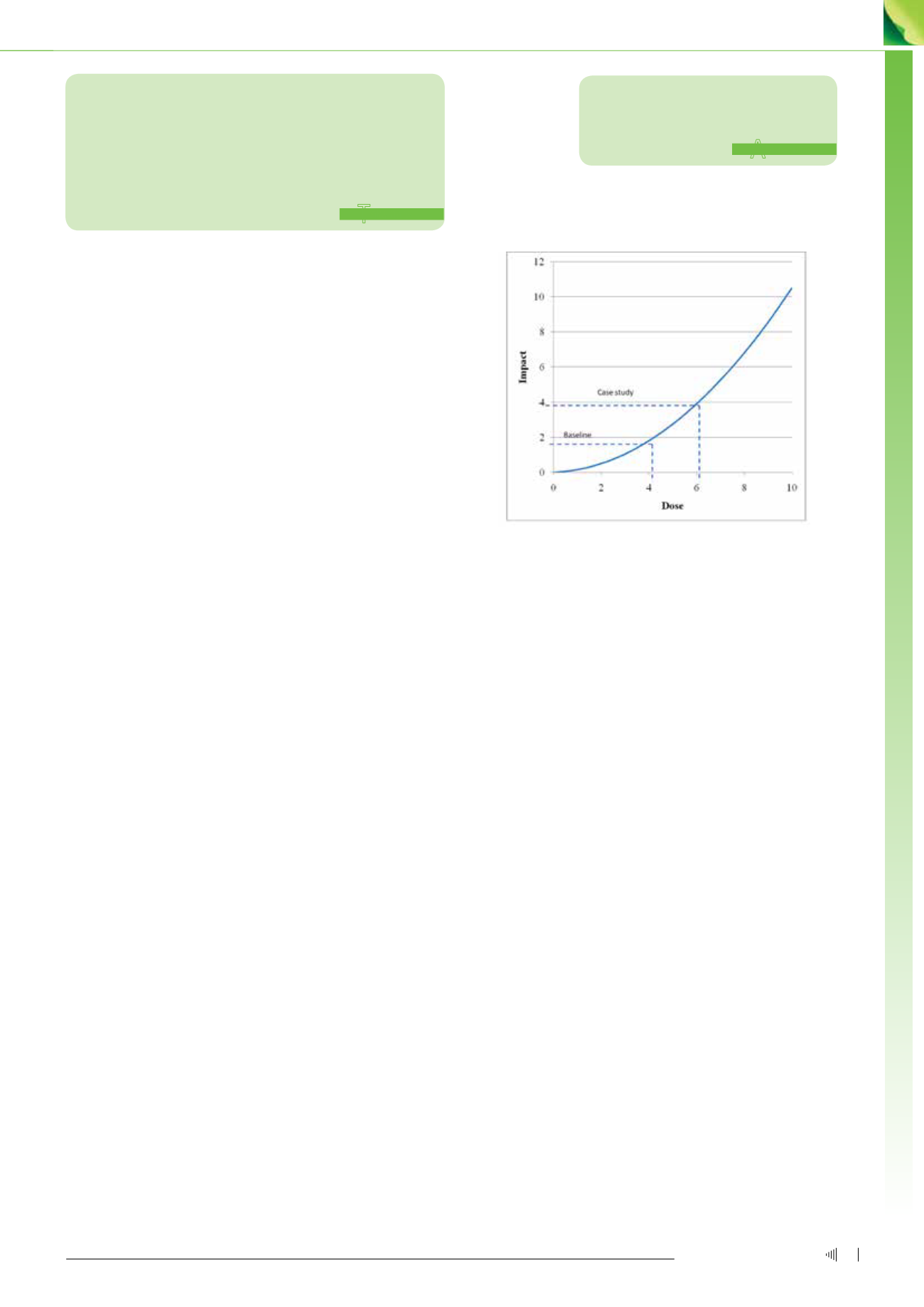
Figure 2 illustrates this for one pollutant and one impact.
This figure illustrates how necessary it is to establish a baseline.
Because the response is non-linear, a 50% increase in the dose dou-
bles the impact. In the case considered in Figure 2, the dose-response
is always positive, but some species can have a negative impact (ie
a positive response) at low doses.
Figure 2: Dose response curve and impact over baseline.
For instance, many plants have an absolute need for some sulphur.
Wheat, for instance, requires sulphur in order to produce gluten, a
sulphur compound. Most rain carries some sulphur naturally, which
replenishes that removed by harvesting the wheat. However, the
concentration in rain is low, so it is essential to allow fields to lie
fallow for a few years after several wheat crops have used the avail-
able sulphur. Alternatively it may be necessary to add some sulphur
compound – typically gypsum – to the field to restore productivity. A
little sulphur in rain is beneficial; too much can be harmful.
For the example given in Figure 2, the net impact is the difference
between the case studied and the baseline, a little over two in this
case (in whatever units are appropriate). Having determined the net
impact, it is then necessary to give this impact a monetary value. For
instance, epidemiology may have shown that an increase of two units
in the sulphur dioxide concentration may cause a 10% increase in the
number of those who suffer from asthma, and it is then necessary to
estimate a) howmany asthma sufferers were impacted at the baseline
and b) what the lifetime cost of asthma to the individual might be.
Finally, to obtain the external cost it is necessary to integrate
the cost of all impacts over all impacted areas. Of course, not all
impacts are those on humans – there may be impacts on crops or
the biosphere. As ExternE noted:
'For some of the impacts (crops and materials), market prices can
be used to evaluate the damages. However, for non-market goods
(especially damages to human health), evaluation is only possible on
the basis of the willingness-to-pay or willingness-to-accept approach
that is based on individual preferences. The monetary values recom-
mended in ExternE by the economic expert group have been derived
on the basis of informal meta-analysis (in the case of mortality values)
and most recent robust estimates.’
ExternE attempted to address all significant impacts, but as the
work progressed, the team became aware of gaps and uncertain-
ties in the current knowledge. Nevertheless, they felt reasonably
confident that they had addressed most of the environmental and
A
bbreviations
ERF - Exposure Response Functions
ESP - Electrostatic Precipitator
GLC – Ground Level Concentration
• There is a growing concern about the external costs of power generation.
• In economics, an external cost arises from an activity that has some
impact upon someone who has not chosen to incur the cost (or receive
the benefit).
• The European Union’s study, ExternE, identifies external costs as a func-
tion of variables such as population density around the power station,
local climatology and level of pollution costs.
41
December ‘13
Electricity+Control


