


Lubrication management has grown more sophisticated in recent years, with plants having access to better products, smarter monitoring tools and more advanced storage and dispensing systems. Yet equipment failure rates linked to lubrication problems remain stubbornly high. According to Colin Ford, Managing Director of Lubrication Engineers (LE) South Africa, the reason for this is that technology can only go so far without the people behind it being properly trained.
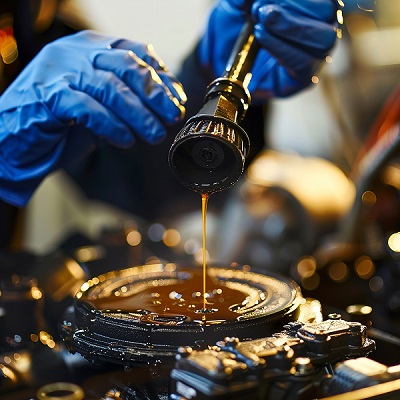 “Studies estimate that roughly 75% of bearing failures are lubrication related,” says Ford. “And in our experience, that tracks.” But what’s behind those failures is almost always a human factor, where, for example, the wrong lubricant is used or is applied incorrectly. “These are not equipment problems. They are training problems,” says Ford.
A persistent skills gap
Ford has seen a consistent pattern across the plants and sites his team works with. Lubrication technicians are often the lowest-paid members of a maintenance team, but they are expected to keep critical machinery running with limited guidance and oversight.
When more experienced mechanics move into senior positions, they tend to pass on bad habits. “Even when training is done on the correct way to do something, the juniors often get told to do things the old way. It becomes a cycle that is very hard to break,” says Ford.
This is compounded by high technician turnover, which Ford says prevents companies from making meaningful progress on predictive maintenance and reliability programmes.
The gap in implementation
This gap between intention and implementation is one of the most common issues LE’s technical teams encounter. A company will invest in a new lubrication storage system or commit to an oil analysis programme, but if the people responsible for day-to-day maintenance have not been properly trained to use those systems correctly, the investment underperforms.
“You can spend a fortune on a new lubrication storage and dispensing system,” says Ford, “but if the people doing the maintenance are not trained correctly, then what is the use?”
The contamination challenge
Around 90% of lubrication contamination occurs before a lubricant is ever applied to a machine. Dust, water and cross-contamination between different products during storage and handling are the most common culprits. Addressing this requires the right equipment, but also needs people who understand why proper procedures matter and know how to follow them consistently.
Ford says that contamination control is one area where training pays back quickly and visibly. When technicians understand the consequences of introducing contaminants into a lubrication system, they are far more likely to follow correct storage, handling and dispensing procedures. “Any system is only as good as the people using it,” he adds.
Technology is not a substitute
The lubrication industry has seen significant advances in monitoring and automation. Online oil sensors, automated single-point lubricators and remote condition monitoring systems are increasingly available and, where properly implemented, offer real benefits. Ford is optimistic about their long-term potential.
“Yes, there is a lot of development going on that can link single-point lubricators to off-site monitoring,” he says. “With oil sensors, vibration analysis or thermal readings, you can monitor an entire plant remotely. It is going to change things.”
But Ford cautions that these tools still need a well-trained team to get the most benefit.
Supplier support
Ford says that to support the industry, lubrication suppliers like LE need to do more than simply sell products. Larger organisations are increasingly asking suppliers to take an active role in monitoring and maintaining equipment – either by having a permanent on-site presence or through more frequent technical visits.
For LE South Africa, this means that training and implementation support are as central to what the company offers as the lubricants themselves. “We have the knowledge and the equipment, as well as the actual lubricants to help,” says Ford. “But training is one of the most important thing we can do for our clients too.”