
TSX-listed Tsodilo Resources has announced a collaborative research initiative with University of Cape Town, Department of Geological Sciences (UCT) to support its Critical Minerals (CM) and Rare Earth Elements (REE) exploration program in Botswana.
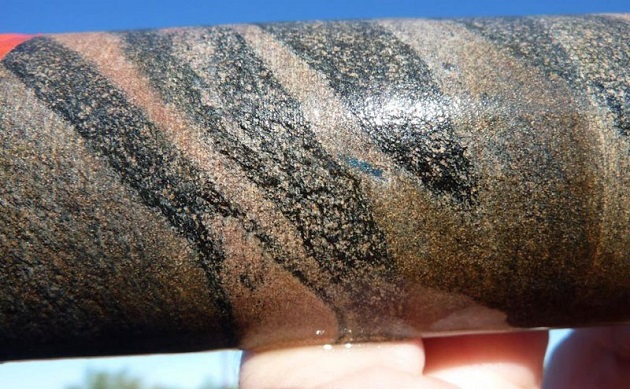
Under the collaboration, UCT will:
Objectives
- Identify and quantify REE-bearing mineral phases using automated mineralogy
- Determine major and trace element compositions of key minerals
- Constrain the distribution of REEs at the mineral scale
- Use oxygen isotope geochemistry to infer the origin of ore-forming fluids
- Develop a genetic model for REE mineralization in the Gcwihaba skarn system
The programme will apply an integrated analytical approach combining automated mineralogy (QEMSCAN), microanalytical geochemistry (EPMA, LA-ICP-MS), and isotopic analysis (oxygen isotopes) to characterize REE mineralization and associated fluid systems.
"Partnering with UCT will help fast-track the evaluation of the Gcwihaba CM/REE project, strengthening our understanding of the system and supporting the potential expansion of known mineralization. The Skarn project has demonstrated the presence of a wide range of rare earth elements and additional critical minerals identified on the USGS 2025 critical minerals list, (See, Tsodilo Resources Ltd. - News Releases)" commented James M. Bruchs, Tsodilo’s Chairman and CEO. “We will also be engaging the scientists and technicians from Botswana Institute For Technology Research & Innovation (BITRI) and Botswana Geoscience Institute (BGI), with respect to sample preparation and analysis where possible,” Bruchs stated.
The mineralogical and geochemical data generated through the UCT program will establish a high-confidence calibration framework supporting the development and validation of data-driven exploration models and improving the interpretation of existing datasets.
Preliminary analysis of legacy drillhole data indicates consistent associations between REE mineralization and a suite of pathfinder elements, suggesting a structured mineral system with potential for proxy-based targeting. The UCT program will help refine and validate these relationships, supporting the identification of the most effective predictive proxies and priority geological domains for CM and REE exploration within the Gcwihaba project. These datasets will also support ongoing internal modelling efforts and collaborative data-driven approaches with Battelle, helping to refine and improve predictive exploration approaches (See, Tsodilo Resources Ltd. - News Releases).
The analytical work by UCT will characterize REE ore mineralogy and constrain the genesis of the mineralizing system using an integrated approach. The study will identify REE-bearing phases, quantify their distribution, and determine the source and evolution of ore-forming fluids, using oxygen isotopes. This work is expected to contribute to the first detailed mineralogical and isotopic characterization of REE-bearing skarn mineralization in Ngamiland, improving understanding of mineral hosts, fluid systems, and ore-forming processes, and contributing to broader exploration models for REE-enriched skarn systems.