
Curro Durbanville High School is an independent school in Durbanville with a high school phase that provides high-quality education for learners from Grade 8 to Grade 12. With state-of-the-art Sports and Academic facilities this school stands out from the rest.
https://www.crown.co.za/lighting-in-design/case-studies/23167-lighting-for-learning#sigProId6e379300f5
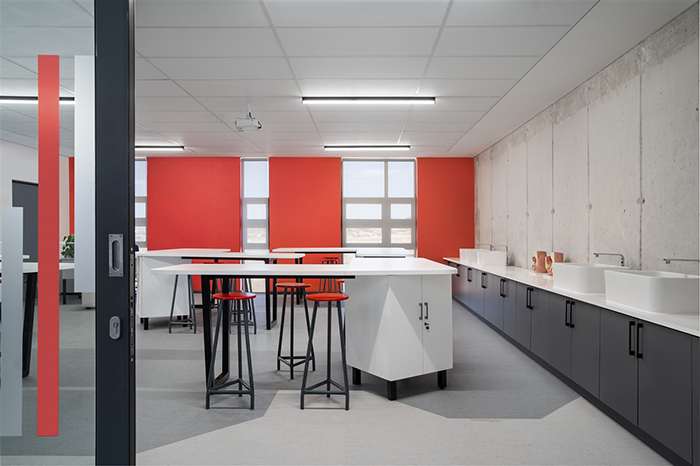
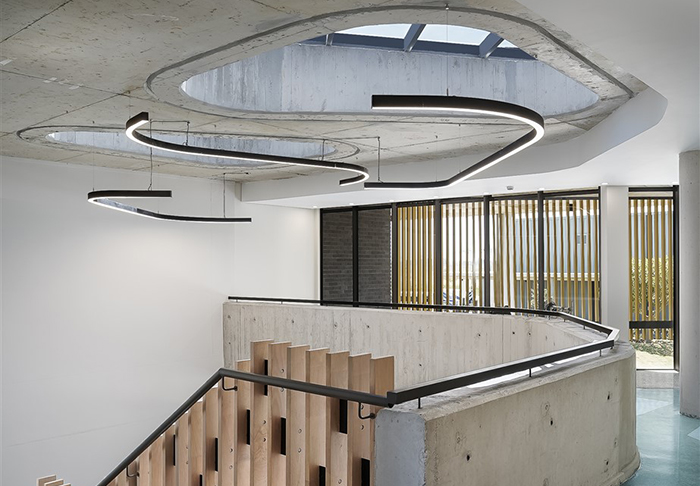
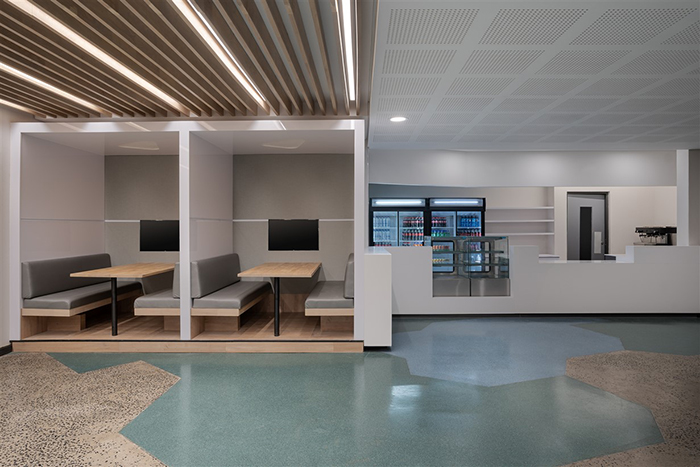
Having vast experience in design of educational buildings and facilities, for BPAS Architects it was a collaborative process with specialist consultants and suppliers to achieve the desired outcome in terms of the lighting. Therefore, the lighting formed an integral part of the facility; from low level external lighting, feature curvilinear suspended strip lights which relate to shaped skylights above them in main lobby spaces, to specific lighting quality requirements in the respective spaces (cafeteria, teaching and collaboration spaces, studios, and labs). Well considered lighting forms an integral part of the theatre, aesthetically and primarily from a functionality aspect. One specific example were the booth seats: The interior designers wanted to create a false skylight within the booths and therefore specified daylight ceiling panels that lay on top of the organic cut outs. In this way, it creates the illusion that you have natural light coming in above you, allowing the space to feel fresh, cooler, and inviting.
“Lighting is a powerful tool in architecture, whether spaces are artificial or naturally lit – it renders the buildings and through successful application can enhance spatial quality and user experience,” explain the architects. “Being an educational project, function in terms of lighting selection was key; illumination to create a positive stimulating educational environment.” The interior designers concur: “Expertly placed lighting adds atmosphere to a space, bringing an interior to life. Great lighting creates depth and height and draws attention to your most impressive areas. We believe that the lighting in this project has created a vibrant space where learners want to be. It is definitely bringing energy and balance to the interior.”
The school has been crafted with a learner-centric approach through collaborative and investigative processes. The conventional ‘school typology’ consisting of classrooms that are framed by four walls was challenged with the concept of constant interaction between spaces. It has been an exciting extensive research-based project; ultimately, the building’s success will rely on the successful incorporation of its users, shifting from the conventional to flexible and interactive learning spaces. “We have learnt a lot and truly enjoyed working with the consultant and manufacturing team. If there is one takeaway from this, it is that good teamwork and communication can make any project run smoothly,” conclude the interior designers.
Learning achieved through interactions is the basis of how a child develops. This is the essence of The Third Teacher. Its principles can be summarised as follows: Firstly, interactions with the adults in their lives (parents and teachers), secondly with peers, and thirdly through interaction with their surrounding environment – the physical space in which learners mature becomes The Third Teacher. The design aims to capture and promote the value of The Third Teacher in its layout, spatial qualities and finishes to create a positive, stimulating educational environment.
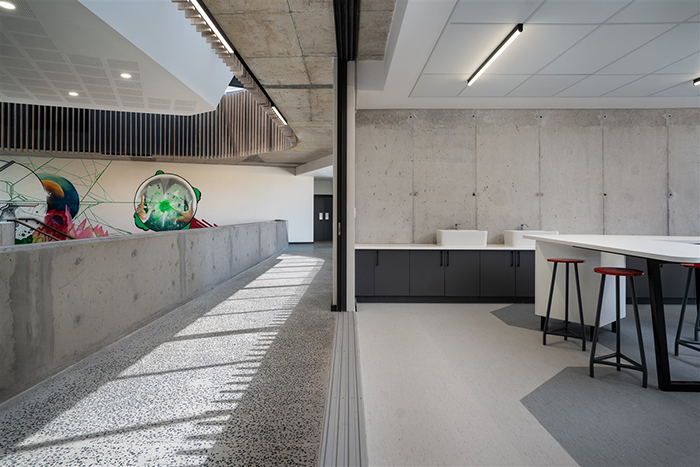
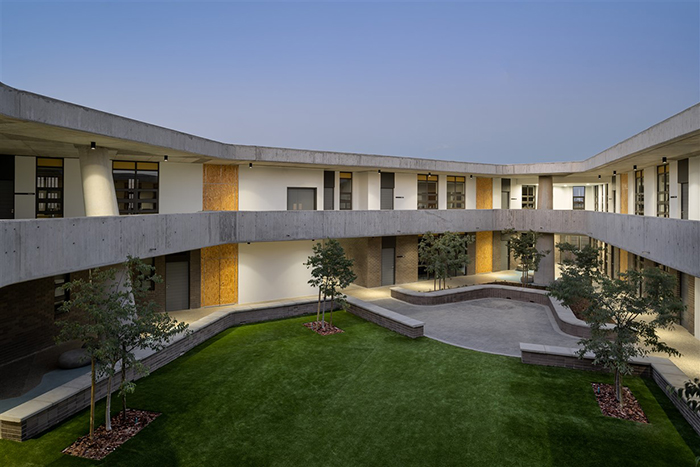
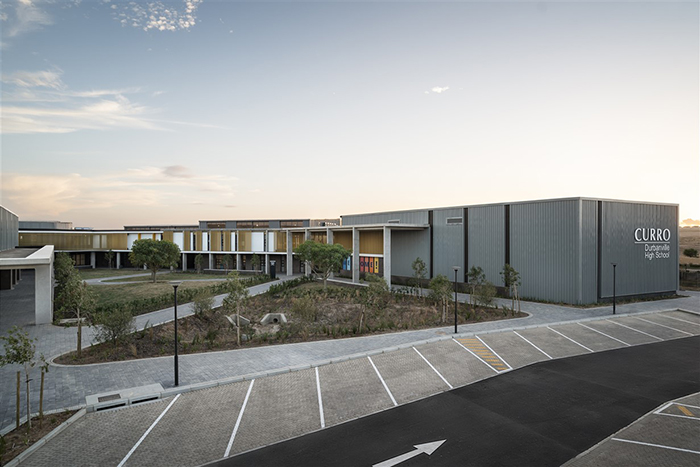
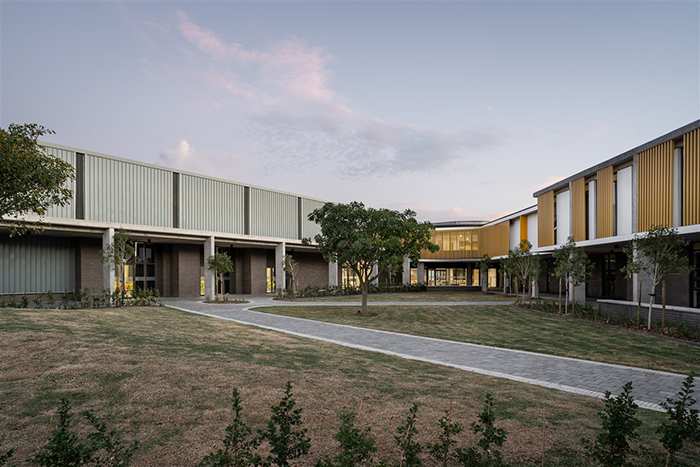
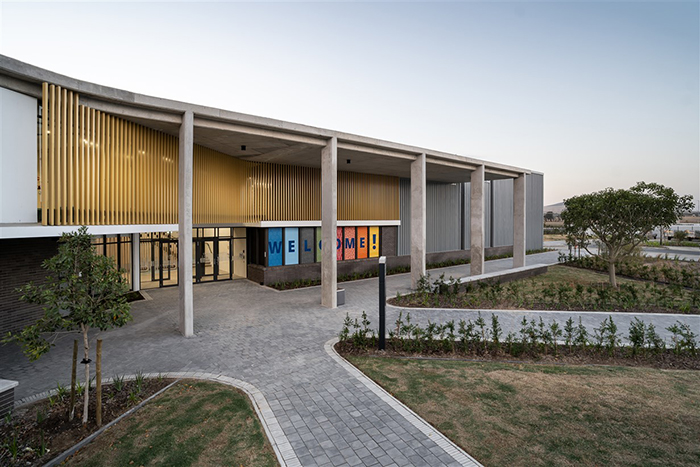
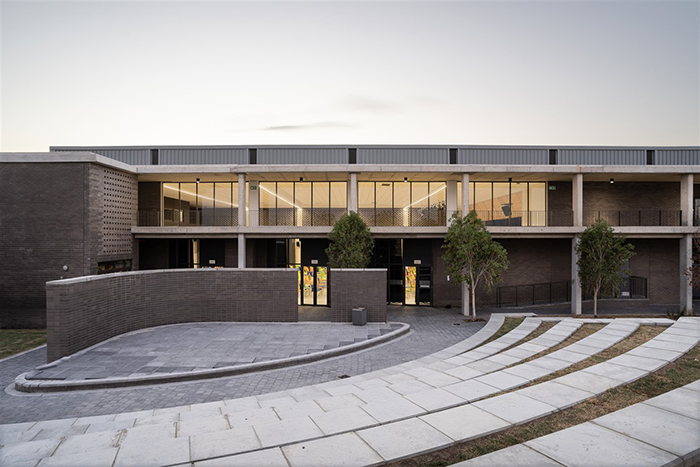
The U-shaped building footprint frames the southern corner of the site, which formulates a forecourt defined by the auditorium and hall on either side. It ‘embraces’ the learners and visitors as they enter, while also acting as a protective buffer from the elements. A direct visual connection to the main entrance makes wayfinding easier for users. The conventional ‘school typology’ consisting of classrooms that are framed by four walls was challenged with the concept of constant interaction between spaces. The classes become permeable and adaptive with furniture, such as combinable tables, designed specifically for the hybrid and flexible use of each space. Diversity is emphasized through juxtaposed slanted columns and colors in this dynamic atrium learning space, embracing difference and uniqueness in a collective and safe environment.
Usually, the classroom is inclusive and private, the hall and passages are semi-private, and the playground is a public space. Now, an art classroom opens into an atrium that can be turned into a gallery or exhibition area, also sharing space with the cafeteria. The cafeteria has a practical kitchen which is used for consumer studies by the hospitality learners. The consumer studies classroom is linked to the cafeteria as well. This type of design provides flexibility and hybrid use, essential for a school that will always be adapting to future needs.
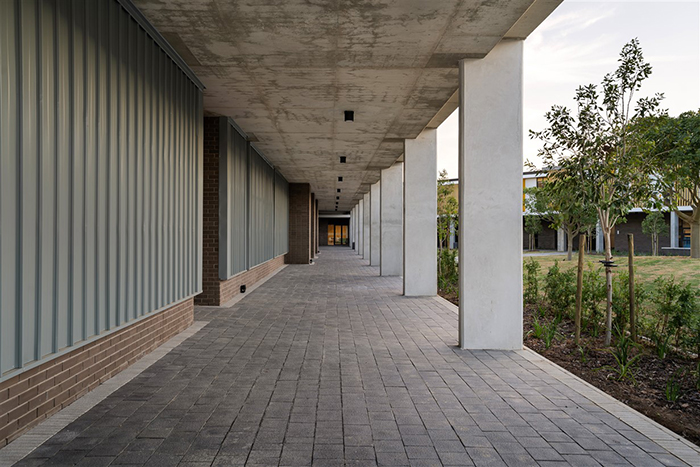
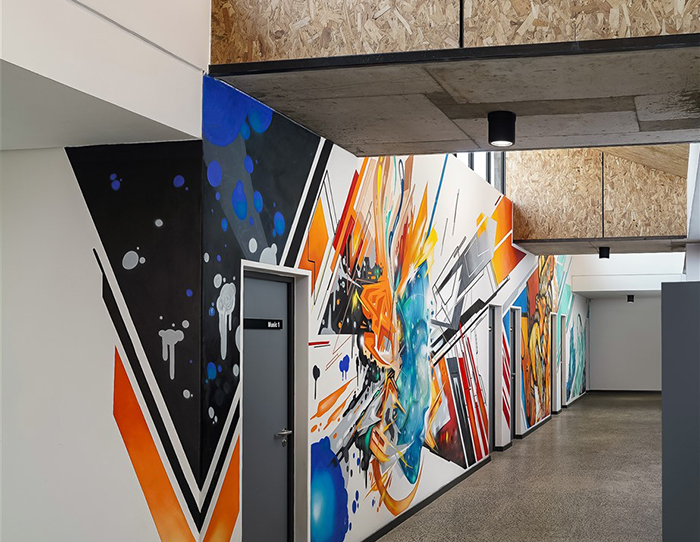
Patterned brickwork acts as a wayfinding method at entrances while contributing to the aesthetics of the building. The auditorium is clad in sheet metal which forms a prominent node at the main entrance. Off-shutter concrete roofs link the program components (auditorium, classroom spaces, and hall). This finish is pulled through to the interiors and complimented with the warmth of natural wood elements. Overall, the school responds to the site through its sustainability considerations and non-stylized architecture. Ultimately, the building’s success relies on the successful incorporation of its users, shifting from conventional to flexible and interactive learning spaces.
PROJECT TEAM
Architects: BPAS Architects
Photographs: Burger Engelbrecht
Electrical engineering: KLS Consulting Engineers
Interior design: B-Sense, ORC
Main contractor: MNK Projects
