COVER STORY
June 2014
MODERN MINING
21
“The facts are, however, that it removes man-
power from dangerous areas and allows workers
to be redeployed to safe workshops and the
repair industry on surface. The support pro-
cesses of a successful, profitable mechanised
mine create other opportunities in other indus-
tries supporting the mines that should more
than make up for fewer underground jobs.”
Finding the answer
“Mechanised XLP breast mining, T-Cut, long
hole and mechanical cutting methods have
already been trialled successfully in some
Western Limb mines,” he continues. “These are
indicating that they can compete favourably on
a Rand per ounce basis with traditional plati-
num mining methods.
“As a result most mines on the Western Limb
are developing technology roadmaps that lead
towards mechanisation and even automation
of some mining processes. Mechanisation will
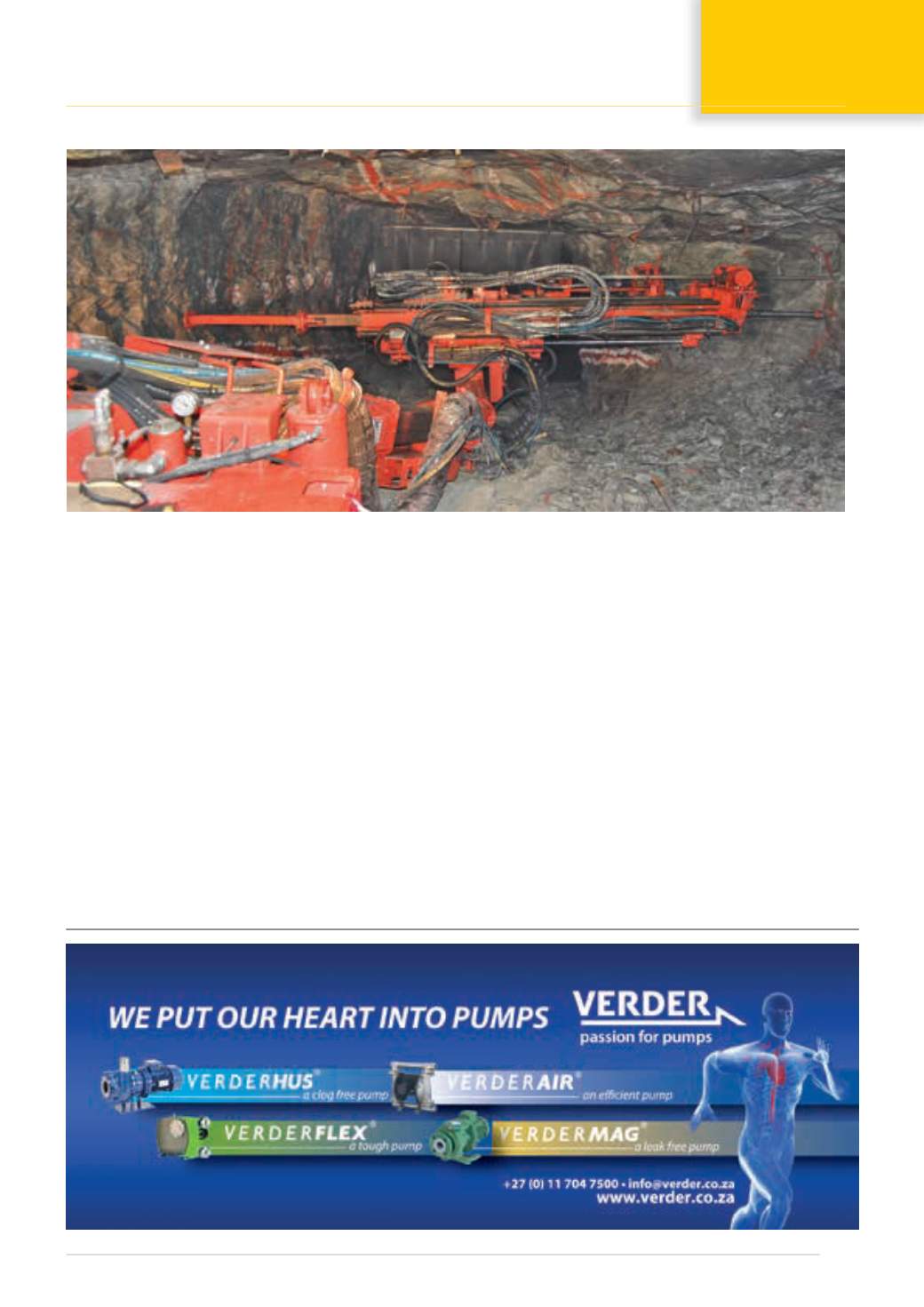
A Sandvik Low Profile (LP)
electro-hydraulic long hole
drilling jumbo in action at a
South African mine.
allow them to meet their short, medium and
long term horizons.
“Without a doubt the current horizon is to
address ways of applying existing technology
to suitable mining methods. Next is to opti-
mise assets and look at using technology to
improve methods. The third and last horizon
is ultimately to look at brand-new methods
and technologies that will use automated non-
explosive mining methods to remove people
from the working environment where possi-
ble,” explains McCoy.
He concludes that the platinum industry is
not unique in its requirement. If machines and
new techniques that are currently being devel-
oped and trialled on the Western Limb prove to
be successful, it will almost undoubtedly ben-
efit the local gold mining industry as well, with
the potential to once again bring the country’s
riches to within the profitable reach of South
Africa’s miners.


