

Coal is a mainstay for heat-intensive industries

South Africa’s decarbonisation debate often starts from the premise that coal must be replaced. In principle, the direction is clear. In practice, the reality is more complex.



South Africa’s decarbonisation debate often starts from the premise that coal must be replaced. In principle, the direction is clear. In practice, the reality is more complex.

As the EU's Carbon Border Adjustment Mechanism (CBAM) enters its permanent phase and global buyers tighten emissions disclosure requirements, South African mining operations are accelerating the integration of privately contracted renewable power into their energy mix.

South African industry has long treated diesel as a cost of doing business. With diesel prices increasing by between R7.37 and R7.51 per litre from 1 April 2026, among the sharpest monthly adjustments in recent history, the sums have changed.
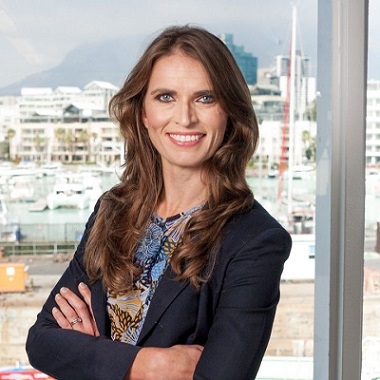
Bronwyn Timm, Business Development Manager at SOLA Group highlights that the latest Eskom tariff increase is changing the way industrial and commercial sectors look at their energy costs – and consider their options. The 8.76% increase effective from 1 April 2026 is substantial and comes at a time of relatively weak growth and tight margins for many companies – yet Timm notes it also creates an opportunity for them to change their approach to energy.
To support reliable energy supply, a manufacturing plant needs a steady-state generator set that can power sensitive CNC machines with stable and clean power. A mine needs generators that operate underground in confined spaces and meet safety, emission, and noise requirements. For a construction site, generators need to be rugged, hold enough fuel for ongoing activities, and able to support a range of different equipment as construction progresses.

Too often, harmonic profiling is handled as a simple ‘box-ticking’ exercise – an approach that runs many industrial sites into trouble. Without a proper understanding of the harmonic profile across the whole installation, decisions are based on incomplete or misunderstood data. Here, John Mitchell, Global Sales and Marketing Director at CP Automation, explains why getting the profile right is essential to solving the root cause of many issues, not just the symptoms.


Editor
Leigh Darroll
Email: ec@crown.co.za
Business Development Manager
Angela Devenish
Email: angelad@crown.co.za